The right bag sealer can help a small business package products faster, create cleaner closures, and protect inventory from moisture, air, and contamination. The best choice depends on your bag material, production volume, seal width, and available workspace.
We selected 10 machines ranging from simple 8-inch impulse sealers to commercial continuous band sealers, so you can match your packaging workflow with the features that matter most.
Best 10 Bag Sealing Machines for Small Businesses Picks for 2026
Adjustable Heat Control

- Adjustable temperature dial
- No warm-up time required
- Iron construction with repair kit
Best For: Small businesses sealing assorted plastic bags
Fast Meat Packaging

- Twists and seals poly bags
- Tape roll seals about 1,200 bags
- One-year warranty included
Best For: Ground-meat and freezer packaging
Heavy-Duty Tape Closure
Steel Tape Bag Sealer with Blade
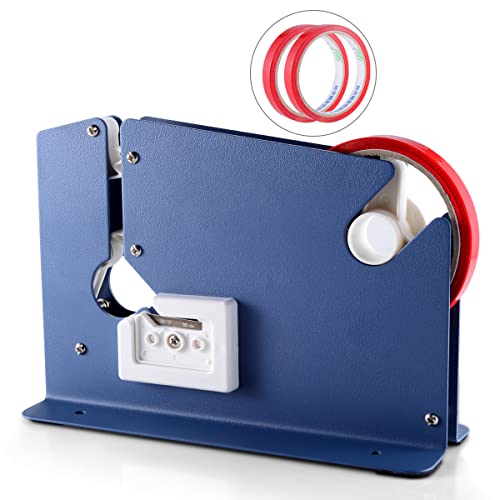
- Metal frame with anti-skid base
- Includes two tape packs
- Built-in trimming blade
Best For: Bakeries, markets, and food-service packaging
Best Compact Starter

- No warm-up time and manual operation
- Eight adjustable temperature settings
- Compact tabletop design with built-in fuse
Best For: Small retail, grocery, produce, and household packaging
Best for Production Lines
VEVOR FR900K Continuous Band Sealer

- Automatic sealing up to 16 m/min
- Adjustable temperature and speed controls
- Prints dates, remarks, or logos while sealing
Best For: Continuous food, agricultural, pharmacy, and industrial packaging
Best Heavy-Duty Compact Pick
Sealer Pro 8-Inch Impulse Sealer

- Aluminum housing for rust-resistant durability
- Pure copper transformer and built-in fuse
- Includes replacement parts and extra fuse
Best For: Repeated manual sealing in small retail and home-based operations
Best High-Volume Option
FRC-520 Automatic Continuous Sealer

- Automatic sealing with speeds up to 16 m/min
- 0–300°C temperature control
- 6–12mm seal width and conveyor belt
Best For: Frequent packaging runs and mixed bag materials
Best Large-Bag Manual Pick

- Seals bags up to 16 inches wide
- Eight adjustable timer levels
- Includes flat and cutting-wire replacements
Best For: Manual sealing of wider food and retail bags
Best Compact Option

- Compact format for small workstations
- No warm-up time; seals in about 1–2 seconds
- Adjustable temperature for varied bag thicknesses
Best For: Small packages and low-to-moderate daily sealing
Adjustable Heat Control – 8-Inch Manual Impulse Sealer
For small businesses comparing bag sealing machines for small businesses, the METRONIC 8-inch impulse sealer is a straightforward electric option for sealing plastic bags without warm-up time. Its adjustable temperature dial helps accommodate different bag materials and thicknesses.
Best For: Home-based food sellers, bakeries, and small shops sealing cookies, coffee, bath bombs, and other dry goods.
Pros:
- Adjustable heat settings for different bag materials.
- 8-inch sealing width suits many small-package applications.
- Iron construction and a pure copper coil are designed for durability.
- Includes a repair kit according to the product highlight.
Cons:
- Manual operation requires holding the handle for about 3–5 seconds.
- Temperature and sealing time need testing to avoid melting the bag opening.
- It seals bags but does not provide an integrated cutting function.
This model is a practical choice when adjustable heat matters more than automation. Start at a low temperature and increase it gradually based on the bag material.
Fast Meat Packaging – Poly Bag Tape Sealer Machine
The LEM Poly Bag Tape Sealer takes a different approach to bag sealing machines for small businesses: it twists and tapes poly bags rather than heat-sealing them. It is designed to help package ground meat efficiently for freezing.
Best For: Butchers, hunters, meat processors, and small food operations packaging ground pork, beef, wild game, or similar products.
Pros:
- Twist-and-seal action combines sealing and cutting in one motion.
- Included tape roll can seal approximately 1,200 poly meat bags.
- Manual operation requires no electrical power.
- Includes a one-year factory warranty and lifetime customer support.
Cons:
- Designed specifically around poly bags and tape rather than general heat sealing.
- The included tape is 3/8 inch wide and may require compatible replacement rolls.
- Its primary use is meat packaging, limiting versatility for some businesses.
Choose this LEM sealer when speed and repeatable tape closure are priorities for meat packaging. It is less suitable if you need adjustable heat for assorted plastic materials.
High-Volume PP/PE Sealing – 8-Inch Adjustable Impulse Sealer
This manual impulse sealer is a compact option for businesses seeking bag sealing machines for small businesses that work with PP and PE bags. It offers eight temperature adjustments, no warm-up time, and a recommended maximum seal thickness of 10 mils.
Best For: Retailers, produce sellers, grocery stores, and household or industrial users sealing compatible PP and PE bags.
Pros:
- Eight temperature settings accommodate different PP and PE bags.
- No warm-up time is needed before sealing.
- Built-in fuse provides an added safety feature.
- Extra grip element is included, and the unit is designed to seal more than 10,000 bags.
Cons:
- It is intended for sealing only and cannot cut materials.
- Recommended maximum seal thickness is 10 mils.
- Manual pressing for roughly 2–3.5 seconds is required for each seal.
This model fits operations that repeatedly seal compatible plastic bags and want adjustable settings in a lightweight manual unit. It is not the right choice if cutting or automated feeding is essential.
Heavy-Duty Tape Closure – Steel Tape Bag Sealer with Blade
The kimilus Steel Tape Bag Sealer is a manual dispenser for businesses that need quick closures without electricity. Among bag sealing machines for small businesses, it stands out for its metal construction, included tape, and built-in blade for trimming excess material.
Best For: Bakeries, markets, restaurants, convenience stores, farmers’ markets, and shops packaging produce, bread, cookies, candy, popcorn, or meat.
Pros:
- Heavy-duty iron construction with an anti-skid bottom.
- Includes two packs of sealing tape.
- Built-in rust-resistant trimmer blade cuts tape and excess bag material.
- Manual slide-through design closes bag necks in seconds.
Cons:
- Requires twisting the bag neck before inserting it into the sealer.
- Uses tape rather than a heat seal, so it is not suitable for every packaging process.
- Manual operation may be slower than a powered sealer for very high volumes.
This is a useful choice for varied retail and food-service packaging where portability, tape closure, and trimming convenience matter. Its metal frame is suited to regular manual use.
Best Compact Starter – 8-Inch Manual Impulse Sealer
For small businesses looking for bag sealing machines for small businesses, this compact 8-inch impulse sealer is a straightforward option for occasional or moderate-volume packaging. It requires no warm-up time, uses manual operation, and offers adjustable temperature settings for different plastic bags.
Best For: Retail counters, produce sellers, grocery shops, household use, and small packaging operations.
Pros:
- Compact, lightweight tabletop design with an 8-inch sealing length.
- Eight temperature settings accommodate different plastic packaging materials.
- Built-in fuse and non-continuous heating support safer, energy-saving operation.
- Includes an extra replacement element grip.
Cons:
- Manual pressing and a 2–3.5-second hold require hands-on operation.
- Its 8-inch seal length may not suit larger bags.
- Designed for plastic bags rather than a broad range of packaging formats.
This is a practical entry-level choice when you need simple, portable sealing without conveyor automation. Its limited seal width and manual workflow make it better suited to smaller batches than continuous production.
Best for Production Lines – VEVOR FR900K Continuous Band Sealer
Businesses needing bag sealing machines for small businesses with higher throughput may prefer this automatic continuous band sealer. It combines adjustable speed and temperature controls with a conveyor system, making it suited to repeatable sealing across assembly-line or production workflows.
Best For: Food, agriculture, pharmacy, and industrial operations that need continuous sealing and optional printed markings.
Pros:
- Automatic sealing speed adjusts from 0 to 16 meters per minute.
- Digital temperature and speed controls support different packaging needs.
- Embossing and type wheels can print dates, remarks, introductions, or logos while sealing.
- All-metal construction and a DC copper motor are designed for demanding use.
Cons:
- Larger and heavier than a tabletop impulse sealer, requiring more workspace.
- Its 750-watt motor and automatic conveyor setup may be excessive for occasional use.
- Best suited to compatible bags within the listed 0.02–0.8 mm thickness range.
The FR900K is the strongest fit here for businesses moving beyond batch-by-batch hand sealing. Its continuous operation and printing capability add productivity, but the larger footprint and more involved controls make it less convenient for very small-volume work.
Best Heavy-Duty Compact Pick – Sealer Pro 8-Inch Impulse Sealer
For small businesses that want bag sealing machines for small businesses with a compact footprint and reinforced components, the Sealer Pro offers manual 8-inch impulse sealing. Its aluminum housing, pure copper transformer, built-in fuse, and replacement parts emphasize durability for repeated day-to-day use.
Best For: Small retailers, home-based sellers, kitchens, and businesses seeking a durable manual sealer for smaller bags.
Pros:
- 8-inch sealing length with a 2-mm sealing width.
- Aluminum housing is described as waterproof and rust-resistant.
- Pure copper transformer is designed to reduce heat and work loss.
- Includes two replacement parts and an extra fuse, plus a stated lifetime guarantee.
Cons:
- Manual operation is less efficient than an automatic continuous band sealer.
- The 8-inch format limits use with wider bags.
- Its feature set is focused on impulse sealing rather than in-line production or printing.
This model stands out when durability and a small footprint matter more than automation. It is a compelling manual option for repeat sealing, while higher-volume operations may benefit more from a continuous band machine.
Best High-Volume Option – FRC-520 Automatic Continuous Sealer
For small businesses that need to package products quickly, the FRC-520 is one of the more production-oriented bag sealing machines for small businesses. Its automatic continuous operation, conveyor belt, adjustable speed, and 0–300°C temperature range are designed for repeatable sealing across several bag materials.
Best For: Small businesses with frequent packaging runs and mixed plastic, foil, compound, or paper bags.
Pros:
- Reaches speeds of up to 16 meters per minute for faster workflow.
- Adjustable 0–300°C temperature range suits different bag materials.
- Creates 6–12mm seals and includes a 6-inch conveyor belt for smoother feeding.
- Handles bags with listed thicknesses of 0.02–0.16mm on both sides.
Cons:
- At 22 pounds, it is substantially less portable than a compact impulse sealer.
- Its automatic continuous design may be more machine than occasional users need.
- The listed model is designed for 110V/60Hz power.
The FRC-520 makes the most sense when sealing speed and consistent workflow matter more than a small footprint. Its adjustable controls and conveyor support give growing operations room to handle varied packaging tasks.
Best Large-Bag Manual Pick – 16-Inch Impulse Sealer
This 16-inch impulse sealer is a practical choice among bag sealing machines for small businesses that want a manual, straightforward way to close larger bags. Its iron housing, adjustable timer, and included replacement wires support routine sealing of food, retail, and general-purpose packaging.
Best For: Retail counters, kitchens, groceries, and small operations sealing bags up to 16 inches wide.
Pros:
- Provides a maximum 16-inch sealing length for wider bags.
- Eight timer levels accommodate different bag thicknesses and materials.
- Includes two flat replacement wires and two round cutting wires.
- Manual operation is simple: press the handle, seal, and release.
Cons:
- The 3mm seal is narrower than the FRC-520’s adjustable 6–12mm range.
- Manual operation requires pressing the handle for every bag.
- Its listed maximum hot-seal thickness is 0.8mm, so material compatibility should be checked.
Choose this model if bag width is a priority and your workflow does not require continuous automatic feeding. The included repair kit and cutting wires add practical value for businesses handling regular manual packaging.
Best Compact Option – 8-Inch Jinhong Impulse Sealer
The 8-inch Jinhong is a compact entry point for small businesses comparing bag sealing machines for small businesses. It uses an electronic timing and heating circuit, requires no warm-up time, and automatically stops heating after the handle is released, making it suited to short, repeatable sealing tasks.
Best For: Cafes, snack booths, grocery counters, home businesses, and other operations sealing small bags.
Pros:
- Compact 8-inch format fits smaller packaging stations.
- Requires no warm-up time and seals in about 1–2 seconds.
- Temperature grade can be adjusted for different bag thicknesses.
- Works with PE, PP, foil, and other listed packing bags.
Cons:
- The 8-inch sealing length is limiting for larger bags.
- It is intended for smaller packages than the 16-inch model.
- Users must set the temperature and press the handle for each seal.
For businesses with limited counter space and modest packaging volumes, this model offers a simple balance of size and functionality. Its short cycle and automatic power-off design are useful for quick day-to-day sealing tasks.
How We Picked the Best Bag Sealing Machines for Small Businesses
We focused on practical requirements for small-business packaging: sealing consistency, ease of operation, machine footprint, material compatibility, replacement-part availability, and overall workflow speed. The lineup includes manual impulse sealers for occasional or moderate use, tape sealers for quick poly-bag closures, and continuous band machines for businesses that package many items in a session.
Because listed specifications can vary by seller or model revision, confirm the stated sealing length, temperature range, supported film thickness, power requirements, and warranty before ordering.
Quick Comparison
| Machine type | Best for | Main advantage | Trade-off |
|---|---|---|---|
| Manual impulse sealer | Small batches and varied products | Simple controls and low operating cost | Requires an operator for every seal |
| Tape bag sealer | Fast poly-bag closing | Quick, compact, and easy to use | Not suitable for heat-sealing every film type |
| Continuous band sealer | Higher-volume packaging | Consistent automated sealing | Higher cost and larger footprint |
| 16-inch impulse sealer | Wider bags and larger packages | Longer sealing capacity | Uses more workspace than 8-inch models |
Key Buying Factors for Bag Sealing Machines for Small Businesses
Bag Material and Thickness
Check whether the machine supports the films you use, such as polyethylene, polypropylene, laminated pouches, or Mylar-style bags. Heat sealers generally require compatible thermoplastic layers, while tape sealers are designed primarily for poly bags. Thicker materials may need higher heat, longer dwell time, or a stronger heating element.
Seal Length and Width
An 8-inch sealer covers many small retail and food-service bags. Choose a 16-inch model when packages are wider than the heating bar. A wider seal can also make it easier to position irregularly shaped bags, but it increases the machine’s footprint.
Volume and Operating Speed
Manual impulse models are economical for low-to-medium output and mixed bag sizes. If an employee repeatedly seals hundreds of packages, a continuous band machine with adjustable speed can reduce repetitive handling and produce more uniform results.
Controls, Maintenance, and Safety
Adjustable temperature and sealing time help prevent weak seals or scorched film. Look for replaceable heating elements, accessible PTFE or sealing strips, stable feet, and clear operating controls. Keep spare elements, fuses, and sealing tape available if downtime would interrupt fulfillment.
Who Should Buy Which Bag Sealing Machines for Small Businesses?
Choose a Manual Impulse Sealer If:
You run a craft, bakery, retail, supplement, or small fulfillment operation with changing package sizes and moderate daily volume. An 8-inch model is a practical starting point for most narrow bags; select the 16-inch option for wider packaging.
Choose a Tape Sealer If:
You mainly close lightweight poly bags quickly and do not need a heat-welded seal. Tape models are especially useful for apparel, small parts, produce, and other products where convenient reopening is acceptable.
Choose a Continuous Band Sealer If:
Your business has steady, higher-volume packaging needs and benefits from hands-free bag feeding, adjustable speed, and repeatable seals. Allow space for the machine and verify that its horizontal configuration suits your bag size and product orientation.