Freshly milled grain can improve flavor, texture, and control over your baking and cooking. The right hand-crank mill also gives you a dependable way to grind staples without relying on electricity.
In this roundup, we focus on manual grain mills that balance build quality, grind consistency, capacity, and everyday usability for home kitchens, homesteads, and small-batch milling.
Best 10 Manual Grain Mills Picks for 2026
Classic Cast Iron Mill
Victoria Manual Cast Iron Grain Mill

- Heavy-duty cast iron with double tin plating
- Adjustable grind for coarse to finer textures
- Clamp-on design with non-slip rubber protector
Best For: Traditional home grinding of corn, grains, spices, and beans
Premium Flour Mill
Country Living Hand Grain Mill

- Solid cast aircraft aluminum construction
- Adjustable from cracked grain to cake flour
- Double sealed industrial grade ball bearings
Best For: Users wanting a premium hand mill for flour control and durability
Authentic Molino

- Cast iron body with food-safe tin plating
- Adjustable coarse-to-fine grinding
- Large hopper with clamp and stabilizing pad included
Best For: Making masa, tortillas, flour, and fresh ground spices at home
Heavy-Duty Flywheel Mill
Lehman's Manual Power Grain Mill

- Grinds dry grains to pastry flour
- 6-cup hopper with 12-inch flywheel
- Can also be motorized
Best For: High-capacity dry grain grinding with easier hand-crank momentum
Coarse-Grind Pick
Cast Iron Hand Grinder for Dry Grains
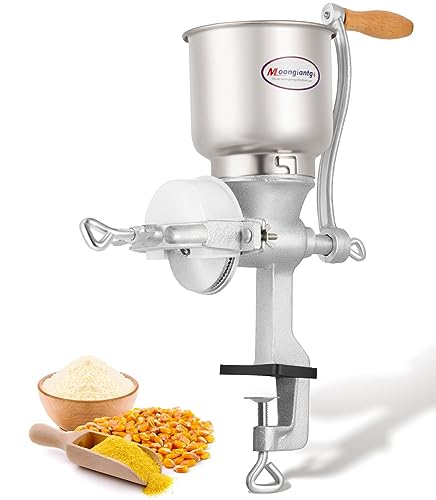
- Large hopper supports bigger batches.
- Adjustable coarseness for coarse output.
- Best for dry grains, feed, and brewing.
Best For: Coarse grinding dry grains and feed mixes
Flour-Making Pick
Stainless Steel Burr Grain Grinder
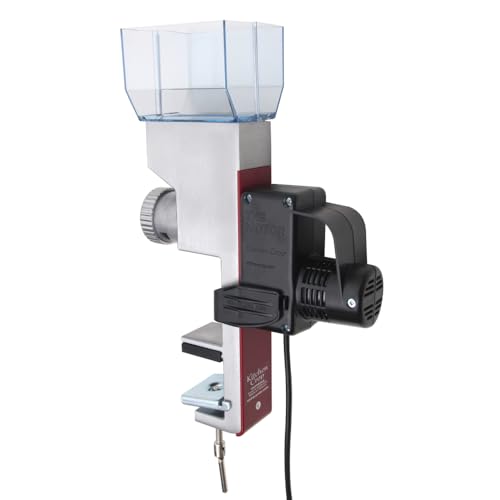
- Can grind from cracked grain to fine flour.
- Works with wheat, rice, oats, and more.
- Compact design with secure mounting clamp.
Best For: Home bakers needing fine, adjustable flour grinding
Multipurpose Hand Mill
VEVOR High-Hopper Manual Grain Mill

- Handles grains, spices, nuts, and coffee beans.
- High hopper cuts down on refilling.
- Clamp and dust cover improve stability and cleanup.
Best For: Versatile dry grinding with less frequent refills
Compact Manual Mill
Kitchen Crop Hand Crank Grain Mill
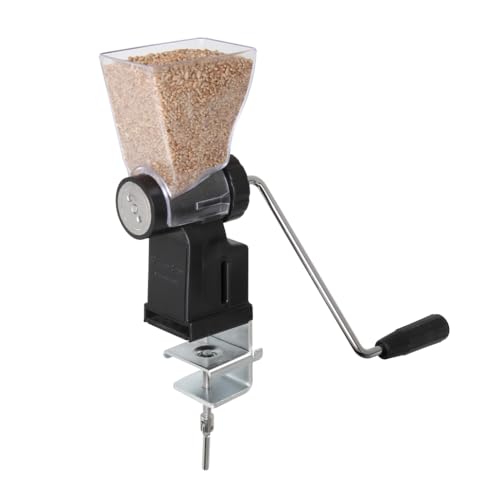
- Grinds multiple dry grains, beans, and spices
- Adjusts from cracked grain to fine flour
- Lightweight with secure countertop clamp
Best For: Small-batch milling and portable countertop use
Heavy-Duty Hand Mill
Cast Iron Grain Grinder with Clamp

- Cast iron build for durable manual grinding
- Large 7.5 lb hopper for bigger batches
- Adjustable grind from fine flour to coarse meal
Best For: Home brewing and off-grid batch grinding
Flywheel Manual Mill
VEVOR Hand-Crank Grain Grinder

- Flywheel design supports steady manual grinding
- Works with grains, spices, nuts, and coffee beans
- 2 L hopper and three fineness settings
Best For: Versatile multi-ingredient grinding with larger capacity
Classic Cast Iron Mill – Victoria Manual Cast Iron Grain Mill
If you want a straightforward manual grain mill for home use, the Victoria cast iron model focuses on durability and versatility. Its adjustable screw lets you change the grind from coarse to finer textures, and the clamp-on design helps it stay secure during use.
Best For: Home cooks and DIY food preppers who want a sturdy, traditional hand grinder for corn, grains, spices, beans, and other dry ingredients.
Pros:
- Heavy-duty cast iron construction with double tin plating
- Adjustable screw for changing coarseness and fineness
- Clamp fits most tables 1/2"–2" thick with a non-slip rubber protector
- Versatile for corn, barley, coffee, seeds, nuts, and more
Cons:
- Cannot grind to a superfine texture
- Will not grind whole wheat into a fine powder
Overall, this is a practical manual grain mill if you value rugged build quality and broad ingredient compatibility over ultra-fine flour output. It is a traditional option backed by a long-running manufacturer history.
Premium Flour Mill – Country Living Hand Grain Mill
The Country Living model is a more substantial manual grain mill built for users who want finer control over flour production. Its solid aircraft aluminum construction, sealed ball bearings, and adjustable grind make it a serious hand mill for dry grains.
Best For: Buyers who want a heavy-duty hand mill that can go from cracked grain to cake flour.
Pros:
- Double sealed industrial grade ball bearings
- Adjustable from cracked grain to cake flour
- Made of solid cast aircraft aluminum
- Lifetime warranty
Cons:
- Heavier than smaller manual mills at 16 pounds
- Best suited to dry grains only
This is a strong pick if you want a premium manual grain mill for consistent home milling and finer flour results. It stands out for its build quality and the flexibility to grind a wide range of textures.
Authentic Molino – Corona Manual Grain Mill
This Corona manual grain mill is a traditional cast iron grinder designed for practical everyday milling. With its large-capacity hopper and adjustable grind, it handles a wide range of ingredients from corn and wheat to rice, beans, and spices.
Best For: Home cooks who want a versatile cast iron grinder for masa, tortillas, flour, and other fresh ground ingredients.
Pros:
- Heavy-duty cast iron with food-safe tin plating
- Adjustable from coarse to fine textures
- Large-capacity hopper and complete hand crank kit included
- Stable countertop clamp with rubber pad
Cons:
- Heavier and more hands-on than compact mills
- Requires countertop clamping for use
For shoppers comparing manual grain mills, this Corona model offers a strong mix of tradition, capacity, and ingredient flexibility. It is a sensible choice if you want a dependable grinder for authentic home recipes.
Heavy-Duty Flywheel Mill – Lehman's Manual Power Grain Mill
If you want a larger manual grain mill for serious dry grain processing, this Lehman’s model is built around a big hopper and a momentum-friendly flywheel. It is designed to grind free-flowing dry grains into pastry flour and can also be motorized if needed.
Best For: Buyers who want a high-capacity hand mill for dry grains and the option to add motor power later.
Pros:
- Grinds free-flowing dry grains to pastry flour
- Extra large 6-cup hopper
- 12-inch flywheel provides extra momentum for hand grinding
- Can also be motorized
Cons:
- Heavier than smaller countertop mills at 26 pounds
- Designed for free-flowing, dry grains only
This is a practical choice if capacity and grinding efficiency matter more than compact size. The flywheel and large hopper make it stand out among manual grain mills for heavier home use.
Coarse-Grind Pick – Cast Iron Hand Grinder for Dry Grains
If you want manual grain mills for coarse grinding, this cast iron hand grinder is built for dry ingredients like corn, barley, wheat berries, coffee, chickpeas, and beans. It’s a straightforward option when you need a hand-cranked mill for animal feed, home brewing, or basic kitchen prep, as long as you do not need fine flour.
Best For: Coarse grinding dry grains, feed mixes, and home brewing ingredients.
Pros:
- Large hopper helps you grind more at one time.
- Adjustable coarseness lets you dial in the texture for different uses.
- Table clamp design helps keep the mill stable while cranking.
- Includes a cover to help reduce splashing during grinding.
Cons:
- Not suitable for wet grains or making butter/paste.
- Cannot grind wheat into total flour for bread.
- Cast iron requires dry cleaning and oiling to help prevent rust.
This is a practical manual grinder if you mainly need a rugged tool for coarse, dry output rather than bakery-level flour. The 1-year warranty and free parts replacement add some peace of mind for basic home use.
Flour-Making Pick – Stainless Steel Burr Grain Grinder
Among manual grain mills, this burr grinder stands out if your goal is actual flour, not just cracked grain. It handles wheat, rice, oats, barley, rye, peppercorns, non-oily seeds, and spices, with an adjustable dial that ranges from coarse grits to fine, bread-quality flour.
Best For: Home bakers who want adjustable grinding from cracked grain to fine flour.
Pros:
- Stainless steel burrs are designed for versatile dry-grain grinding.
- Adjustable coarseness supports both coarse and fine results.
- Compact size stores easily in a drawer or cupboard.
- Mounting clamp helps secure the mill to a countertop or table.
Cons:
- Only for dry, non-oily grains and similar ingredients.
- Smaller 2-cup capacity may mean more frequent refilling.
- Manual grinding takes more effort than electric options.
This is the strongest fit in the group if you want a hand-powered mill that can actually produce bread-style flour. The included motor note and 5-year warranty make it a more future-minded pick for regular baking use.
Multipurpose Hand Mill – VEVOR High-Hopper Manual Grain Mill
This VEVOR option is a versatile choice among manual grain mills if you want a hand-crank grinder for grains, spices, nuts, coffee beans, and home brewing ingredients. Its high hopper and adjustable disc make it easier to handle repeated dry-grinding tasks without using electricity or adding heat to the ingredients.
Best For: Multipurpose dry grinding with a high hopper and stable table clamp.
Pros:
- Works with grains, spices, nuts, coffee beans, and more.
- High hopper reduces how often you need to refill.
- Adjustable fineness helps you choose coarser or finer output.
- Dust cover and secure clamp help keep grinding tidy and steady.
Cons:
- As with similar hand mills, finer results may require multiple passes.
- Only suitable for dry grinding applications.
- Heavier cast iron build may be less convenient to move around.
This model is a solid all-round manual grinder if you want one tool for several dry ingredients and value a stable, cleaner grinding setup. The powder-coated cast iron construction also points to long-term durability.
Compact Manual Mill – Kitchen Crop Hand Crank Grain Mill
Kitchen Crop Hand Crank Grain Mill Wheat Flour Grinder, Stainless Steel Metal Burrs (The Grain Mill)
Check Price On AmazonIf you want manual grain mills that are easy to store and versatile for small batches, this Kitchen Crop hand-crank grinder is a practical pick. Its stainless steel burrs handle wheat, rice, oats, barley, rye, corn, beans, peppercorns, and other non-oily grains and spices, while the adjustment dial lets you move from cracked grains to fine flour.
Best For: Small-batch home milling, countertop use, and buyers who want a lightweight hand mill with optional motor compatibility.
Pros:
- Stainless steel burrs grind a wide range of dry, non-oily grains and seeds.
- Adjustable dial supports coarse cracked grain through fine bread-quality flour.
- Lightweight design under 3 pounds is easy to store and move.
- Clamp base secures to counters and tables up to 2 inches thick.
Cons:
- Two-cup hopper is suited to smaller batches rather than bulk milling.
- Best limited to dry, non-oily ingredients.
- Electric drive motor is optional and sold separately.
Overall, this mill fits shoppers who value portability, simple setup, and flexible grind settings over large capacity. It is a sensible manual option for kitchens where occasional flour grinding matters more than heavy daily production.
Heavy-Duty Hand Mill – Cast Iron Grain Grinder with Clamp
Among manual grain mills, this cast iron grinder stands out for buyers who want a sturdy hand-crank tool with a larger hopper. It is built for corn, wheat, oats, and barley, and the adjustment mechanism lets you switch from fine flour to coarse meal for baking or brewing needs.
Best For: Home brewers, off-grid kitchens, and users who want a rugged manual grinder with a larger batch capacity.
Pros:
- Heavy-duty cast iron construction is made for long-term use.
- 7.5 lb hopper supports bigger batches without constant refilling.
- Adjustable grind settings handle flour, meal, and brewing textures.
- Table clamp helps keep the mill stable during cranking.
Cons:
- At 7.5 pounds, it is heavier and less portable than compact mills.
- Manual winding means every batch requires hand effort.
- Best suited to dry grains rather than specialty ingredient variety.
This is a straightforward choice if durability and batch size matter more than portability. It makes sense for people preparing grain for brewing, baking, or backup pantry use where a stable manual mill is more important than a lightweight design.
Flywheel Manual Mill – VEVOR Hand-Crank Grain Grinder
If you are comparing manual grain mills for versatility and a smoother cranking experience, this VEVOR model offers a flywheel design and a stable base. It works with grains, corn, spices, nuts, and coffee beans, and its three fineness settings make it easier to match the grind to different kitchen tasks.
Best For: Users who want a versatile manual mill for multi-ingredient grinding, home baking, and brewing prep.
Pros:
- Flywheel design supports steady grinding and helps reduce heat buildup.
- Three fineness settings cover coarse, medium, and fine grinding.
- Large 2 L hopper reduces how often you need to reload.
- Stable base improves consistency on flat surfaces.
Cons:
- At 32.2 pounds, it is much less portable than smaller hand mills.
- Finer textures may require multiple passes.
- Motor drive is possible, but the motor is not included.
This model makes sense for shoppers who want a more substantial manual grinder with broader ingredient coverage. It is especially appealing if you value steady operation and larger capacity over compact size and easy storage.
How We Picked the Best Manual Grain Mills
We looked for mills that offer practical value for real-world use: sturdy construction, stable mounting, adjustable grind settings, and enough hopper capacity to handle common tasks without constant refilling. We also considered how well each design suits different grains and how comfortable it is to use for longer sessions.
Quick Comparison: What Matters Most
Before buying, compare the milling material, crank design, capacity, and intended grain type. Cast iron models are often favored for durability, while stainless steel burrs may appeal to buyers who want easier maintenance. Flywheel-equipped mills can reduce effort, while compact clamp-on designs are better for smaller kitchens.
Key Buying Factors for Manual Grain Mills
Grind Consistency
Look for a mill that can produce the texture you need, whether that is coarse cracked grain, meal, or a finer flour. Not every hand mill handles all textures equally well.
Compatibility with Grains
Some Manual Grain Mills are best for corn and wheat, while others also handle oats, barley, rye, chickpeas, and coffee. Check the manufacturer’s grain list before you buy.
Effort and Ergonomics
Wheel size, handle length, and crank resistance all affect how tiring the mill feels. A larger flywheel or smoother burr system can make longer grinding sessions easier.
Mounting and Stability
A secure table clamp or a heavy base matters, especially when milling harder grains. Stability improves both safety and output.
Capacity and Cleanup
If you mill regularly, a larger hopper and easy-to-clean parts can save time. For occasional use, simpler compact mills may be enough.
Who Should Buy Which Manual Grain Mills?
If you want a rugged, long-lasting option for frequent use, choose a heavy-duty cast iron mill. If you value smoother operation and less hand fatigue, consider a model with a flywheel. If your priority is versatility, look for Manual Grain Mills that clearly support multiple dry grains and allow adjustable fineness. Home bakers, emergency-preparedness buyers, and small-scale food hobbyists will all benefit from matching the mill’s design to how often and what you plan to grind.
For most buyers, the best choice is the mill that balances grind quality, durability, and effort level for your primary grain use case.