Turning a seasonal apple harvest into fresh cider is easier when your press matches the volume, fruit preparation, and workflow you actually use. The right model can also handle grapes, berries, and other soft fruit for wine or juice.
This roundup compares 10 manual, hydraulic, and hydropress options, from compact wooden-basket presses for occasional batches to larger stainless-steel machines designed for heavier harvests.
Best 10 Cider Presses for Seasonal Harvests Picks for 2026
Classic Manual Pick
4.75-Gallon Beechwood Fruit Press

- 4.75-gallon manual capacity
- Solid red beech basket
- Pour spout and stable stand
Best For: Home users processing modest seasonal fruit batches
High-Capacity Hydraulic Choice

- 3-ton hydraulic pressing force
- 22L outer barrel with filter basket
- 304 stainless steel construction
Best For: Larger batches and frequent home or small-scale pressing
Heritage Batch Pick
American Harvester Double-Tub Press

- Integrated apple grinder
- Hard maple and cast iron build
- Designed for two-person operation
Best For: Group harvests and high-output family pressing
Water-Powered Option

- Uses garden-hose pressure
- Includes bag and splash protection
- Handles apples, pears, and berries
Best For: Fruit pressing where a garden hose is readily available
Best Stainless Steel Pick
3.69-Gallon Heavy-Duty Fruit Wine Press
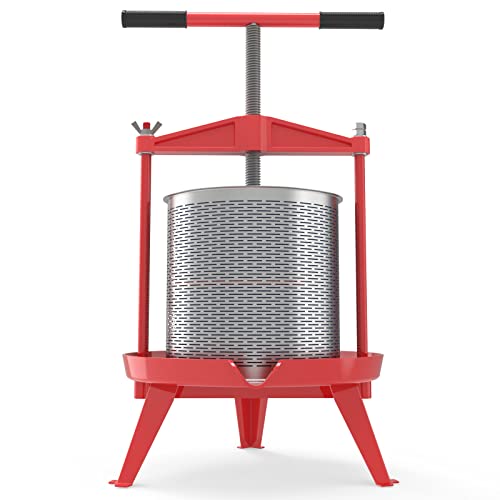
- 14-liter stainless steel basket
- Large Acme screw and T-handle
- Detachable basket for cleanup
Best For: Home users and small seasonal harvests
Best Manual Harvest Kit
4.75-Gallon Press With Crusher

- 18-liter press capacity
- Includes 7-liter fruit crusher
- Manual and power-independent
Best For: Users processing hard fruit and vegetables on the move
Best High-Capacity Option
5.8-Gallon Hydraulic Cider Press

- 5.81-gallon outer barrel
- Hydraulic jack for high pressing force
- 304 stainless steel construction
Best For: Large harvests and higher-volume pressing
Traditional Wood Pick
4.75-Gallon Manual Cider Press

- 18-liter wood basket for home batches
- T-handle and spiral action reduce pressing effort
- Includes a filter bag for juice straining
Best For: Small home harvests and traditional manual pressing
Best Heavy-Duty Pick
40L Stainless Steel Cider Press

- 40-liter capacity for larger harvest batches
- 5-ton hydraulic jack supplies strong pressing force
- 304 stainless steel juice-contact components
Best For: Orchards and high-volume seasonal processing
Water-Powered Efficiency Pick

- 40-liter basket for larger fruit batches
- Runs from a standard domestic water supply
- Includes a filter bag and splash guard
Best For: Low-effort pressing where a garden hose is available
Classic Manual Pick – 4.75-Gallon Beechwood Fruit Press
For smaller seasonal harvests, this manual beechwood press offers a straightforward way to turn crushed apples, grapes, or berries into juice or wine. Its 4.75-gallon capacity and quiet, motor-free operation make it a practical option among cider presses for seasonal harvests.
Best For: Home users and families processing modest batches of seasonal fruit.
Pros:
- Solid red beech basket is designed for moisture and wear resistance.
- Manual pressing helps reduce foaming and leaves relatively drier pulp.
- Heavy-duty stand includes a pour spout and optional foot mounting holes.
- Breakaway basket design simplifies pulp removal between pressing sessions.
Cons:
- Manual operation requires physical effort.
- Its 4.75-gallon capacity is better suited to home-scale batches than large harvests.
- Hand-wash care may require more cleanup time.
This is a traditional, compact choice for users who value quiet operation and a natural wood basket over powered or high-volume equipment.
High-Capacity Hydraulic Choice – 22L Stainless Steel Press
When seasonal harvests call for more pressing power, this stainless steel model combines a 22-liter outer barrel with a 3-ton hydraulic jack. It is a robust option among cider presses for seasonal harvests, with a filter basket and cloth intended to separate pulp from juice.
Best For: Home brewers, craft cider makers, and small operations handling larger fruit batches.
Pros:
- Hydraulic jack provides up to 6,600 pounds of pressing force with less manual effort.
- 304 stainless steel construction is rust-resistant and easy to rinse clean.
- Includes an 11-liter perforated filter basket and fine-mesh filter cloth.
- Reinforced triangular bracket supports stability during operation.
Cons:
- At 36 pounds, it is less convenient to move than a lightweight manual press.
- Hydraulic operation adds mechanical complexity compared with a simple screw press.
- The nearly 30-inch height may require dedicated counter or workspace clearance.
Its hydraulic design is the main advantage for repeated or demanding batches, while the stainless steel body supports easier cleanup after pressing.
Heritage Batch Pick – American Harvester Double-Tub Press
This American Harvester combines grinding and squeezing in one double-tub setup, making it suited to harvest days when efficiency matters. Its hard maple and cast iron construction gives it a traditional, durable character among cider presses for seasonal harvests.
Best For: Families or small groups that want to grind and press substantial quantities together.
Pros:
- Integrated grinder prepares apples before pressing.
- Double-tub design supports a combined grinding and squeezing workflow.
- Hard maple and cast iron construction is intended for long-term use.
- Two-person operation is described as capable of producing up to 50 gallons in an afternoon.
Cons:
- Two-person operation is needed for the stated high-output workflow.
- Its larger, traditional design may be less convenient for occasional small batches.
- Supplied notes do not specify the press capacity or overall dimensions.
This is a compelling choice for collaborative harvest pressing, especially for buyers who appreciate heirloom-style construction and an integrated grinder.
Water-Powered Option – 23.8-Gallon Hydropress
The Hydropress uses garden-hose water pressure instead of a hand-operated screw or hydraulic jack, offering a different approach to seasonal fruit processing. With stated 5.3- and 10.7-gallon capacities and a maximum water pressure of 3 bar, it is a practical alternative among cider presses for seasonal harvests.
Best For: Users with access to a garden hose who press pears, apples, berries, and similar fruit.
Pros:
- Uses ordinary garden-hose water pressure for pressing.
- Sheet-metal gap is designed to support better output.
- Includes a pressing bag and splash-water protection.
- Works with pears, apples, berries, and other fruit.
Cons:
- Requires a suitable garden hose and water connection.
- At 79 pounds, it is relatively heavy to reposition.
- The supplied notes list multiple capacities, so buyers should confirm the configuration.
Its water-powered operation can reduce hand labor, but the heavier build and need for hose access make placement and setup important considerations.
Best Stainless Steel Pick – 3.69-Gallon Heavy-Duty Fruit Wine Press
For seasonal harvests, this manual press offers a practical stainless steel setup for apples, grapes, herbs, nut milks, and more. Its 14-liter basket and large-diameter Acme screw are suited to home cider and wine making when you want useful capacity without relying on power.
Best For: Home users and small harvests needing a corrosion-resistant, easy-to-detach manual press.
Pros:
- 14-liter basket handles substantial fruit batches.
- Heavy-duty T-handle generates pressure with relatively little effort.
- Food-grade stainless steel basket resists rust and corrosion.
- Detachable basket simplifies hand washing and cleanup.
Cons:
- Hand-wash care requires manual cleaning.
- Manual pressing takes more involvement than powered equipment.
- Its listed dimensions may require dedicated storage space.
This is a well-rounded choice for home orchard use, combining a useful batch size with durable materials and straightforward operation. Choose it if cleanup and corrosion resistance matter as much as pressing capacity.
Best Manual Harvest Kit – 4.75-Gallon Press With Crusher
This press-and-crusher combination gives seasonal harvests a two-step workflow for breaking down and pressing fruit. With an 18-liter press capacity, a 7-liter crusher, and manual operation, it fits users who want to process apples, pears, peaches, carrots, and other firm produce without a power supply.
Best For: Mobile home pressing and users who want a matching crusher included with the press.
Pros:
- 4.75-gallon press capacity supports larger batches.
- Included 7-liter crusher helps prepare hard fruits and vegetables.
- Extended hand shank and phase-in pressing are designed to reduce labor.
- Food-grade stainless steel components are rust resistant.
Cons:
- Both crushing and pressing are manual tasks.
- Hand-wash care adds cleanup time after harvest sessions.
- The wood basket may require more care than an all-metal design.
The included crusher makes this a more complete seasonal-harvest solution than a press alone. It is especially appealing when portability and independence from an electrical supply are priorities.
Best High-Capacity Option – 5.8-Gallon Hydraulic Cider Press
For larger seasonal harvests, this stainless steel cider press combines a 5.81-gallon outer barrel with a 2.91-gallon filter barrel. Its hydraulic jack is designed to reduce manual effort while producing high pressing force, making it a substantial option for home or commercial-style fruit and wine processing.
Best For: Larger batches and users who prioritize hydraulic assistance, stability, and stainless steel construction.
Pros:
- 5.81-gallon outer barrel provides generous working capacity.
- Hydraulic jack delivers up to 6,613.87 pounds of stated pressure.
- Food-grade 304 stainless steel is rust-proof and hygienic.
- Reinforced triangular brackets support a stated 330.69-pound load capacity.
Cons:
- Its larger capacity may be excessive for small batches.
- Manual hydraulic operation still requires hands-on setup.
- The supplied notes do not specify dimensions or cleaning instructions.
This is the strongest capacity-and-force choice in the group for demanding harvest periods. Select it when batch volume, frame stability, and reduced pressing effort outweigh the likely need for more space and setup.
Traditional Wood Pick – 4.75-Gallon Manual Cider Press
For smaller seasonal harvests, this manual wood press offers a traditional way to make cider and fruit juice without electricity. Its T-shaped handle, spiral pressing action, and 18-liter capacity are suited to home use and occasional pressing.
Best For: Families, small fruit stores, and users who want a compact manual press for apples, grapes, and other fruit.
Pros:
- 18-liter basket can handle approximately 22 to 33 pounds of fruit per load.
- Thicker press plate and larger stressed area are designed to improve juice extraction.
- Can also press vinasse, oil pomace, and honeycomb.
- Includes one filter bag for straining juice.
Cons:
- Manual operation requires physical effort.
- Hand-wash care may make cleanup more involved.
- Its capacity is smaller than the 40-liter alternatives in this roundup.
This is a practical choice for cider presses for seasonal harvests when portability, traditional operation, and moderate batch sizes matter more than maximum throughput.
Best Heavy-Duty Pick – 40L Stainless Steel Cider Press
Designed for larger seasonal harvests, this 40-liter hydraulic press uses a 5-ton jack to squeeze substantial fruit loads at once. Its stainless steel juice-contact components and adjustable tray make it suited to repeated home, orchard, or party use.
Best For: Orchard owners, harvest-season processing, and users who need high capacity for fruit, herbs, nut milks, or honey.
Pros:
- 40-liter capacity supports larger batches than the manual 18-liter press.
- Hydraulic jack provides up to 5 tons of pressing force.
- AISI 304 stainless steel basket, pressing plate, and juice tray resist acidic juice.
- Adjustable tray height and a 90-degree-turning beam simplify loading and container placement.
Cons:
- At 85 pounds, it is relatively heavy to move.
- Its larger frame requires more storage space.
- Hydraulic operation may be more equipment than occasional small-batch users need.
Among these cider presses for seasonal harvests, this model stands out for capacity and hydraulic force, making it the strongest fit when batch volume and durable juice-contact materials are priorities.
Water-Powered Efficiency Pick – 10.7-Gallon Hydraulic Press
This 40-liter hydraulic fruit press uses a connected garden hose rather than electricity or direct muscle power. With stainless steel construction, a filter bag, and a splash guard, it is a convenient option for cider presses for seasonal harvests and frequent fresh-juice making.
Best For: Families, caterers, hotels, fresh-juice shops, and small wine operations with access to a domestic water supply.
Pros:
- 10.7-gallon capacity accommodates substantial fruit batches.
- Garden-hose operation helps save electricity and manual effort.
- Maximum 3-bar pressure setting is described as close to normal household tap pressure.
- Includes a filter bag and splash guard for more controlled pressing.
Cons:
- Requires access to a compatible garden hose and domestic water supply.
- Its 40-liter size may be excessive for very small batches.
- The supplied notes do not specify the exact stainless steel grade.
This press is a compelling middle ground for users who want high capacity without relying on electricity or sustained hand pressure, provided a water connection is available.
How We Picked These Cider Presses for Seasonal Harvests
We focused on the practical features that matter during harvest: basket capacity, pressing force, materials, stability, fruit-contact surfaces, and ease of cleaning. The selection includes traditional hand-operated presses, hydraulic models with greater leverage, and hydropress designs intended to speed up batch processing. We also considered whether each press is better suited to occasional household use, frequent small-batch production, or larger seasonal workloads.
Capacity labels can vary by manufacturer, so treat gallon and liter figures as approximate working capacity rather than guaranteed juice yield. Actual output depends on fruit variety, ripeness, grinding quality, and how firmly the pomace is packed.
Quick Comparison
- Compact manual presses: Best for small gardens, occasional cider making, and users who want simple operation with minimal setup.
- Mid-size presses: A practical balance for families and hobbyists processing several baskets of apples or mixed fruit.
- Hydraulic presses: Better when you want more pressing force with less strenuous manual turning, especially for dense or large batches.
- Hydropresses: Useful for efficient pressing and potentially faster cleanup, but they may require a suitable water supply and more storage space.
- Press-and-grinder combinations: Convenient if you do not already own a crusher, though integrated systems can be heavier and more involved to clean.
Key Buying Factors for Cider Presses for Seasonal Harvests
Capacity and Batch Size
Choose based on how much fruit you expect to process at one time, not just the total harvest. A smaller basket is easier to load and store, while a 22- to 40-liter class press can reduce the number of batches for larger harvests.
Manual or Hydraulic Operation
Manual T-handle presses are straightforward and do not need power, but they require physical effort. Hydraulic models use a jack to apply more consistent force and may be preferable when processing firm apples or repeated loads.
Construction and Food Contact Materials
Look for a rigid frame, stable feet, corrosion-resistant hardware, and a basket that can withstand repeated loading. Stainless steel fruit-contact parts are convenient to sanitize; wood baskets offer a traditional design but need careful washing and thorough drying.
Fruit Preparation and Cleanup
Most cider presses work best with apples that have been crushed first. If a grinder is not included, budget for a separate crusher. Removable baskets, accessible juice trays, filter bags, and smooth surfaces can make the cleanup routine substantially easier.
Who Should Buy Which Cider Presses for Seasonal Harvests?
Choose a compact manual press if you make cider occasionally, have limited storage, or value a simple, electricity-free setup. Choose a mid-size stainless-steel or wooden-basket press for regular home use and mixed fruit projects. Choose a hydraulic press if your harvests are substantial or you want to reduce the effort required at the handle. Choose a hydropress when speed, efficient pressing, and streamlined batch work matter more than portability. Finally, choose a press-and-grinder system if you want one coordinated setup and do not already own equipment for preparing apples.