Choosing among electric corn grinders is easier when you match the machine to your batch size, desired texture, and available power. The models in this roundup range from compact household mills to heavy-duty feed and commercial pulverizers.
Use the comparison and buying advice below to identify the right balance of motor strength, hopper capacity, grind adjustment, durability, and cleanup convenience for your kitchen, workshop, or farm.
Best 10 Electric Corn Grinders Picks for 2026
Heavy-Duty Pick
VEVOR 3000W Adjustable Grain Mill

- 3000W motor for powerful dry grinding
- Adjustable thickness for coarse-to-fine results
- Cast-iron construction with stainless steel funnel
Best For: Demanding dry-grinding jobs at home, on a farm, or in a small commercial setting
High-Power Value
3000W Electric Grain Mill Grinder
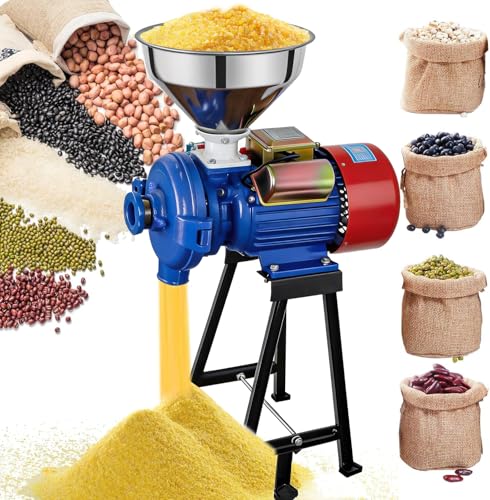
- 3000W copper motor with adjustable coarseness
- Large stainless steel hopper for smoother feeding
- Handles dry grains, coffee, flour, and animal feed
Best For: High-volume dry grinding with flexible texture control
Farm Feed Favorite
60L Electric Corn Grinder for Livestock Feed

- Large 60L hopper for fewer refills
- Seven sieves for customized feed texture
- Designed for farms, homesteads, and livestock
Best For: Making fresh, adjustable-texture feed in larger batches
Compact Kitchen Pick
VEVOR 2100W Swing-Type Grinder

- Compact 1.8-pound-capacity stainless-steel design
- 28,000-RPM motor with triple blades
- Timed grinding and adjustable 30–300 mesh fineness
Best For: Small-batch dry grains, spices, coffee, and kitchen grinding
Best Farm & Home Value

- 25-liter capacity for home or farm use
- Five sieves provide 2–8 mm grind options
- Detachable design simplifies storage and cleaning
Best For: Household milling and small-farm animal feed
Best High-Speed Fine Grinding

- 3400W motor reaches 32,000 rpm
- 270-degree swing design eases pouring
- Safety lid lock and overload protection included
Best For: Fine powders from dry corn, grains, spices, and coffee
Best Heavy-Duty Farm Throughput

- Manufacturer-rated output of up to 200 lb per hour
- Adjustable grind from coarse meal to fine powder
- Durable galvanized cast-iron housing
Best For: Small farms and high-volume dry-grain milling
High-Capacity Pick
VEVOR 1500W Commercial Grain Mill

- Processes about 110 lb per hour
- Adjusts from 30 to 300 mesh
- Cast-iron build with non-slip feet
Best For: Large-batch dry grinding on farms, ranches, or in labs
Wet-and-Dry Versatility Pick

- Handles wet and dry grinding
- Includes separate milling discs
- Adjustable grinding thickness
Best For: Food and feed applications using corn, grains, rice, or soaked soybeans
Screen-Controlled Value Pick
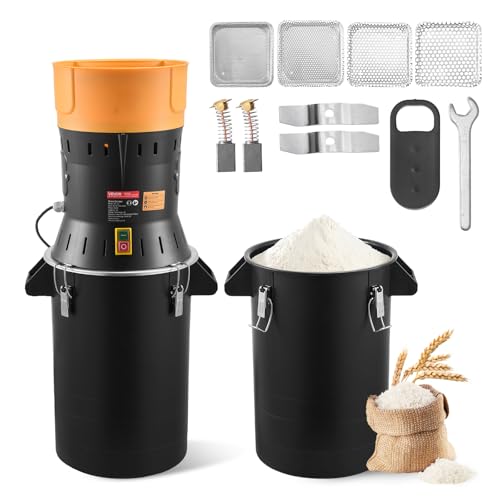
- Includes five interchangeable screens
- 15,000 RPM motor with galvanized blades
- Detachable hopper supports easier cleaning
Best For: Dry corn, grain, feed, flour, and spice grinding with screen-based control
Heavy-Duty Pick – VEVOR 3000W Adjustable Grain Mill
For shoppers comparing electric corn grinders, this VEVOR model stands out for its 3000W motor, cast-iron grinding plates, and adjustable thickness control. It is built for dry grains and other ingredients, with a substantial 46.7-pound construction suited to demanding use.
Best For: Heavy-duty home, farm, or small commercial grinding of dry corn, wheat, rice, soybeans, spices, and similar crops.
Pros:
- Powerful 3000W motor supports continuous dry grinding.
- Adjustable control lets you select the desired grinding thickness.
- Cast-iron body and grinding plates are designed for durability.
- Stainless steel funnel and funnel-shaped feed design support steady feeding.
Cons:
- At 46.7 pounds, it is not especially portable.
- Its 500 g capacity is smaller than large-hopper farm feed mills.
This is a strong choice when durability and motor power matter more than compact storage. Its industrial construction and broad crop compatibility make it versatile, though buyers should account for its weight and relatively limited batch capacity.
High-Power Value – 3000W Electric Grain Mill Grinder
This electric corn grinder combines a commercial-grade 3000W copper motor with adjustable coarseness, making it useful for processing dry grains from coarse meal to fine powder. Its enlarged stainless steel hopper is designed to keep feeding steady while reducing the need for frequent refills.
Best For: Users who want a powerful, multipurpose dry grinder for corn, wheat, rice, oats, sorghum, coffee beans, flour, starch, or animal feed.
Pros:
- 3000W motor reaches a stated 1460 r/min for fast grinding.
- Adjustable thickness knob supports different powder textures.
- Large stainless steel hopper helps enable continuous feeding.
- Heavy-duty galvanized body and cast-iron head are built for frequent use.
Cons:
- Designed for dry ingredients only; wet or soaked materials can cause problems.
- Correct startup and gradual feeding are required to help prevent jams or motor overload.
Choose this model if you prioritize motor power and broad dry-grinding capability. The operating instructions are important, but the adjustable output and large hopper make it a practical option for repeated grain-processing tasks.
Farm Feed Favorite – 60L Electric Corn Grinder for Livestock Feed
Among electric corn grinders, this 1300W feed mill is tailored to farm and homestead work. Its 60-liter hopper supports larger batches, while seven interchangeable sieves let you adjust the texture for poultry feed, livestock feed, flour, or general grain crushing.
Best For: Homesteaders, small farms, and livestock owners making fresh feed from dry corn, wheat, rice, barley, sorghum, soybeans, and other grains.
Pros:
- Large 60-liter, or 15.8-gallon, hopper reduces refill frequency.
- Seven interchangeable sieves provide multiple particle sizes.
- Suitable for poultry, livestock, flour, and general grain-processing needs.
- Simple green start and red stop controls, plus a built-in handle.
Cons:
- Only dry materials should be processed.
- The sieve must be changed only after unplugging the mill and clearing any clog.
- Its 1300W motor is less powerful on paper than the 3000W models in this roundup.
This is the most feed-focused option here. Its oversized hopper and included sieve set are particularly useful when preparing repeated batches for animals, while the lower wattage may make it less appealing for users seeking maximum pulverizing power.
Compact Kitchen Pick – VEVOR 2100W Swing-Type Grinder
This compact VEVOR grinder offers a practical alternative to larger electric corn grinders for smaller batches. Its 2100W motor, 800 g cup, timed controls, and three stainless-steel blades are designed to turn dry grains, corn, coffee, and spices into fine powder quickly.
Best For: Kitchens, small-batch processing, and users who want a compact grinder for dry grains, spices, cereals, coffee, and pepper.
Pros:
- Compact 9.3-pound stainless-steel unit is easier to store and move.
- 28,000-RPM motor and triple blades support fast, even grinding.
- Five-, 15-, and 30-second timer settings simplify operation.
- Adjustable coarseness offers a stated range from 30 to 300 mesh.
Cons:
- Its 1.8-pound capacity is not intended for large feed batches.
- It cannot process wet, oily, or sticky materials.
- Continuous operation is limited to five minutes followed by a 5–10 minute rest.
For small quantities, this model is easier to handle than heavy commercial mills and adds convenient timed operation. It is best viewed as a versatile dry ingredient pulverizer rather than a high-capacity livestock-feed machine.
Best Farm & Home Value – 1000W Portable Corn Grinder
For shoppers comparing electric corn grinders for household milling or animal feed, this 1000-watt model offers a practical mix of capacity, portability, and grind-size flexibility. Its 25-liter bucket and included sieves support different dry-grain applications.
Best For: Home users and small farms grinding dry corn, grains, spices, or feed for animals.
Pros:
- Includes five sieves for 2–8 mm grinding options.
- 25-liter capacity suits household or farm use.
- Detachable hopper and bucket make cleaning and storage easier.
- Simple start and stop buttons support straightforward operation.
Cons:
- Designed for dry materials; water must be kept away from the motor.
- Requires thorough hopper drying before reassembly.
- Its 1000-watt motor is less powerful than the commercial models in this roundup.
This is a sensible choice when versatility and portability matter more than maximum throughput. The interchangeable sieves make it especially useful for users who want both feed and home-milling options.
Best High-Speed Fine Grinding – VEVOR 2000g Pulverizer
Among electric corn grinders, the VEVOR 2000g model stands out for high-speed pulverizing and very fine results. Its 3400-watt motor, 32,000-rpm speed, and swing design are suited to users processing dry grains, corn, spices, or coffee in small batches.
Best For: Home kitchens, workshops, and small processing operations that need superfine dry powders.
Pros:
- High-speed motor can grind dry ingredients into fine powder quickly.
- 270-degree swing body helps with pouring and can promote uniform grinding.
- Food-grade stainless-steel construction resists processing contamination.
- Lid safety switch and overload protection add useful safeguards.
Cons:
- Limited to dry materials; wet, oily, sticky, or fresh ingredients are unsuitable.
- Operation is limited to five minutes followed by a recommended 5–10-minute rest.
- The grinding tank should be cleaned with a dry cloth or brush rather than water.
Choose this model if fine powder and speed are priorities. Its batch capacity is smaller than a feed mill’s, but the powerful motor and 30–300 mesh range make it better suited to pulverizing than general bulk feed production.
Best Heavy-Duty Farm Throughput – 3000W Adjustable Grain Mill
For buyers seeking electric corn grinders for demanding farm or milling work, this 3000-watt industrial-style machine emphasizes output and adjustable grinding. The manufacturer states that it can process up to 200 pounds of grain per hour, making it the most production-focused option here.
Best For: Small livestock farms, home flour milling, brewing, and users preparing larger quantities of dry grain or feed.
Pros:
- Heavy-duty 3000-watt pure copper motor is built for high-output grinding.
- Adjustable settings allow coarse meal through fine powder.
- Handles dry corn, wheat, soybeans, rice, barley, and some herbs.
- Galvanized cast-iron housing is designed for durability and rust resistance.
Cons:
- At 47 pounds and over 30 inches tall, it is less portable than the other models.
- Its industrial design may be more machine than occasional home users need.
- Supplied notes do not specify included sieves or a detailed cleaning procedure.
This is the strongest fit for buyers who value throughput and adjustable results over compact storage. Its substantial size and weight make a permanent workspace sensible, especially for regular feed or flour production.
High-Capacity Pick – VEVOR 1500W Commercial Grain Mill
For shoppers comparing electric corn grinders for large batches, this VEVOR model emphasizes capacity and adjustable powder fineness. Its 1500W motor is rated to process about 110 pounds per hour, while the cast-iron construction is suited to dry grains, corn, coffee, and spices.
Best For: Farms, ranches, labs, and households that need high-volume dry grinding with adjustable results.
Pros:
- 1500W motor and stated 110-pound-per-hour processing capacity
- Adjustable grinding range from 30 to 300 mesh
- Cast-iron grinding plates, stainless steel feed port, vents, and non-slip feet
- Works with dry grains, corn, coffee beans, and many spices
Cons:
- Not intended for wet, oily, or sticky materials
- At 47.2 pounds, it is a substantial machine to move
- Its industrial size may be more than occasional users need
This is a strong choice when throughput and fine-control settings matter most. Buyers should plan for a permanent or semi-permanent workspace and use only suitable dry ingredients.
Wet-and-Dry Versatility Pick – VEVOR 3000W Corn Mill
Among electric corn grinders, this VEVOR commercial mill stands out for handling both dry ingredients and selected wet mixtures. It includes separate milling components for dry grinding and wet grinding, plus an adjustable setting for controlling texture.
Best For: Food preparation and feed applications involving corn, grains, soaked soybeans, rice, starch, or similar materials.
Pros:
- Supports both wet and dry grinding
- 3000W motor provides high-powered continuous grinding
- Adjustable thickness for corn, cereals, spices, coffee, and nuts
- Stainless steel funnel and solid cast-iron body
Cons:
- Its industrial design is relatively large and workspace-oriented
- Wet grinding requires changing to the included sand milling disc
- The supplied notes do not state a specific hourly processing capacity
This model is the more flexible option for buyers who want one machine for dry corn and wet food mixtures. Its heavier construction and commercial format make it better suited to regular, demanding use than casual countertop grinding.
Screen-Controlled Value Pick – VEVOR 600W Grain Pulverizer
For electric corn grinders with interchangeable output control, this 600W VEVOR pulverizer uses included screens to set the coarseness. Its 25-liter capacity, high-speed motor, and detachable hopper make it suited to dry grains, corn, spices, cereals, coffee, and pepper.
Best For: Users who want screen-based control over feed, flour, or spice textures and a cleaning-friendly dry grinder.
Pros:
- Includes 3, 4, 5, 6, and 8 mm screens for different textures
- 15,000 RPM motor with sharp galvanized blades
- 25-liter capacity and a wide 9.8-inch feed port
- Detachable hopper and feed inlet simplify cleaning
Cons:
- Designed for dry materials rather than wet grinding
- Uses 220 volts, which may not suit every household setup
- Screen sizes provide a different type of control than continuously adjustable mills
This is a practical fit for buyers who prefer swapping screens to select a grind size. Check the 220-volt requirement before purchasing, and keep water away from the motor during cleaning.
How We Picked the Best Electric Corn Grinders
We focused on the specifications that matter most when processing dry corn: motor power, stated capacity or throughput, grind adjustment, construction, hopper design, included screens or sieves, and intended use. We also separated compact spice-style pulverizers from larger feed mills, since a machine designed for flour or seasoning may not be the best choice for continuous livestock-feed production.
Because advertised performance can vary with moisture, kernel size, screen selection, and duty cycle, treat wattage and capacity as useful comparison points rather than guaranteed output. Always confirm the manufacturer’s operating instructions before grinding.
Quick Comparison
| Best for | Prioritize | Typical advantage |
|---|---|---|
| Occasional home use | Compact design and adjustable texture | Easier storage and simpler setup |
| Fresh flour or meal | Fine-grind control and stable operation | More consistent results |
| Chicken or livestock feed | Large hopper, sieves, and feed-oriented design | Faster batch processing |
| Spices and dry ingredients | Sealed chamber and high-speed pulverizing | Fine powder production |
| Frequent heavy-duty use | Durable housing, cooling, and overload protection | Better long-term reliability |
Key Buying Factors for Electric Corn Grinders
Motor Power and Duty Cycle
Higher wattage can help with dense, dry kernels and larger batches, but it does not guarantee better results. Look for clear guidance on run times, rest periods, and overload protection. A powerful commercial-style unit may be unnecessary for occasional household milling.
Capacity, Throughput, and Hopper Design
Large hoppers reduce refilling during feed production, while smaller chambers are often easier to clean and store. Check whether the advertised capacity refers to the hopper, grinding chamber, or output per hour. A stable funnel and anti-slip base are valuable when feeding grain continuously.
Grind Adjustment and Included Screens
Adjustable settings or multiple sieves let one machine produce coarse cracked corn, meal, flour, or different feed textures. Confirm that the screens are included and that replacements are available. Very fine settings may require slower feeding to prevent clogging.
Materials, Safety, and Maintenance
Stainless steel or cast-metal components can improve durability, while galvanized parts may help resist corrosion. Look for secure lids, grounded electrical components, clear airflow around the motor, and accessible areas for brushing out residue. Never put hands or tools into an operating grinder, and process only ingredients approved by the manufacturer.
Who Should Buy Which Electric Corn Grinders?
Choose a compact electric grinder if you mill small amounts of corn, spices, or flour and value easy storage. Choose a feed-focused model with a larger hopper and several sieves if you regularly prepare chicken or livestock feed. For frequent commercial-style batches, prioritize robust construction, higher stated throughput, thermal protection, and a design that can be cleaned quickly between ingredients.
Before ordering, verify the required voltage, plug type, maximum kernel moisture, acceptable ingredients, warranty, and replacement-part availability. The best electric corn grinder is the one that matches your batch size and texture needs without forcing you to pay for capacity or power you will rarely use.